
01
The Initial Problem
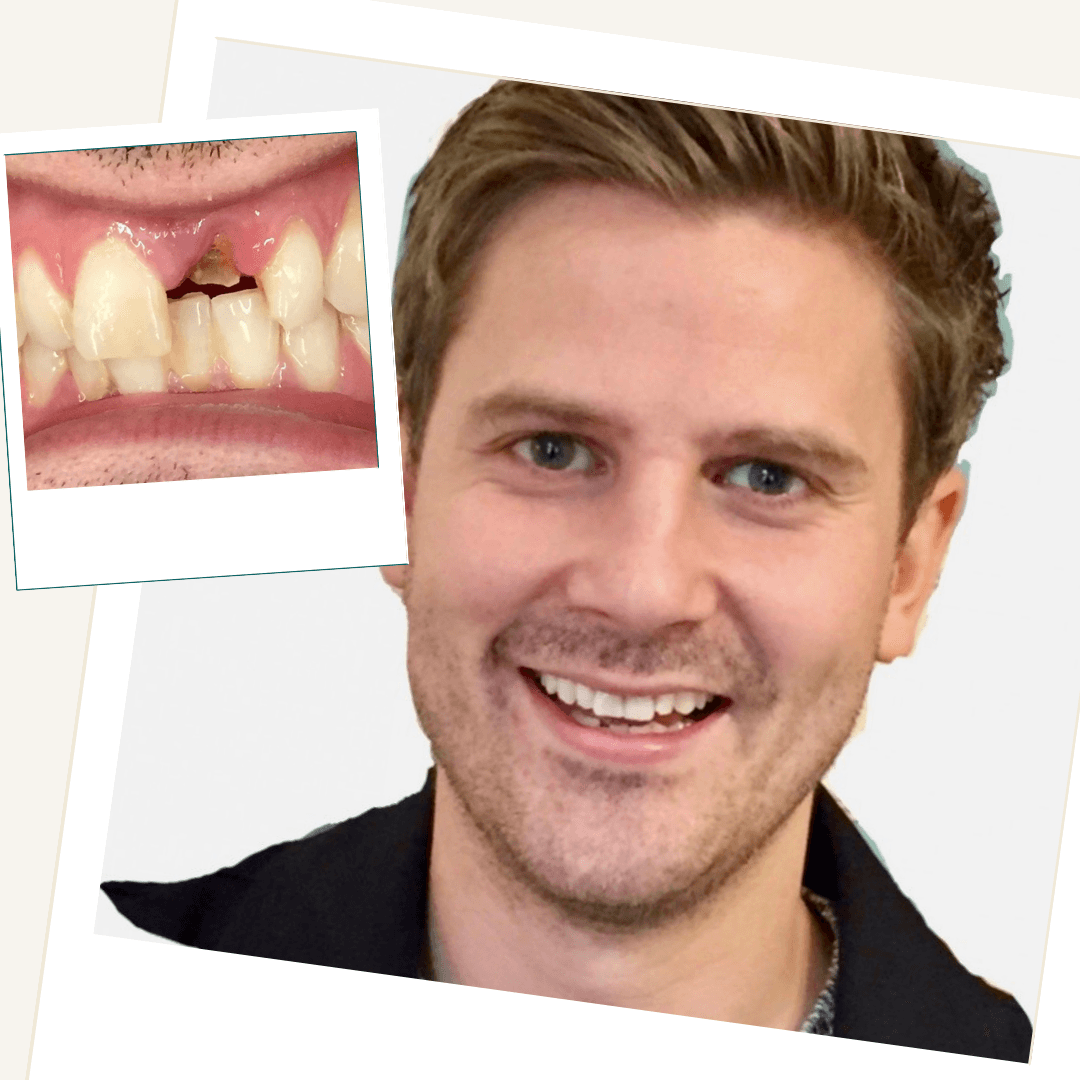
The upper left central incisor had previously undergone root canal treatment and had been restored with a post and crown. Following trauma during sport, the existing crown and post fractured. The remaining tooth could no longer provide a predictable foundation for another conventional crown.
02
Digital Assessment and Treatment Planning
Careful planning is particularly important when replacing a front tooth, where small differences in tooth position, gum contour or crown shape can influence the final appearance. Records used to assess the remaining tooth, available bone, surrounding anatomy and restorative space included:
- Clinical examination
- Digital dental X-rays
- CBCT three-dimensional imaging
- Clinical photography
- Digital intraoral scanning
03
Immediate Implant Placement and Bone Grafting
Following removal of the damaged tooth, a dental implant was placed into the extraction site during the same treatment stage.
A localized bone graft was used around the implant to fill the space between the implant and extraction socket where required. Platelet-rich fibrin (PRF), prepared from the patient's own blood, was also used as part of the surgical procedure to support tissue healing.
A cosmetic removable temporary solution was provided while the implant healed, so the patient did not have to remain with an untreated gap at the front of the smile. This managed patient comfort and appearance effectively throughout the transition phase.
04
The Final Custom Restoration
Following an appropriate osseointegration healing period, the implant foundation was safely verified. Advanced shade-matching and custom lab metrics were performed to match the optical characteristics of the adjacent natural central incisor. A custom porcelain crown implant was fabricated and precisely fitted, aiming to support long-term structural integrity, functional bite alignment, and a symmetric aesthetic outline.
05
Long-Term Maintenance and Specialist Review
The care framework was implemented to address oral function, support natural speech pacing, and manage smile aesthetics. To help maintain clinical progress, a customized home care routine was outlined alongside recommended periodic specialist review visits.