
01
Whitening and Shade Planning
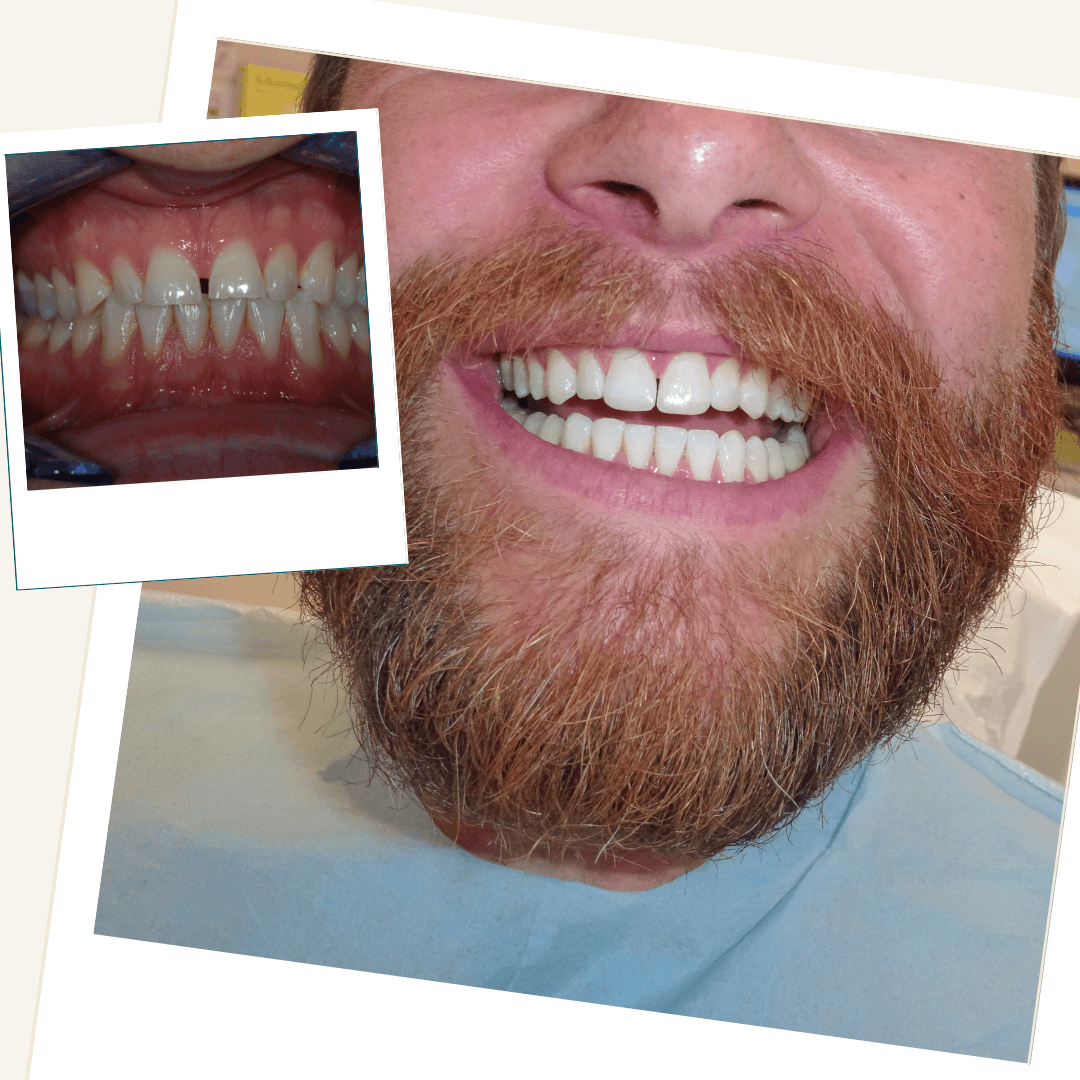
The assessment identified external staining associated with factors including red wine and coffee. Professional home whitening was provided to establish a lighter baseline shade before restorative treatment.
A two-week interval followed the whitening phase to allow the shade to stabilise before the composite materials were selected and matched.
02
Additive Composite Bonding
For this patient, the planned additive procedure did not require mechanical tooth preparation and was completed without local anaesthesia. The tooth surfaces were cleaned, conditioned and isolated before bonding.
Composite resin was added and shaped to close the midline gap and rebuild lost tooth anatomy, with the shade selected to coordinate with the whitened teeth.
03
Bite Management Using the Dahl Principle
To create restorative space for the increased tooth length, the bite was managed using the Dahl principle. Initial contacts were intentionally established on selected anterior teeth and first premolars.
The temporary change in bite contacts and the expected adaptation period were explained in advance. The patient was advised to contact the clinical team if discomfort persisted or caused concern.
04
Monitoring, Adaptation and Bite Review
Follow-up assessments were carried out at two-month intervals to review comfort, composite margins, bite contacts and wear patterns.
Over approximately six months, compensatory tooth movement helped the posterior teeth regain contact. The resulting bite was then assessed for stability and function.
05
Post-Treatment Support and Protection
After bite stabilisation, a custom occlusal splint was provided for night-time wear to help reduce loading associated with clenching or grinding.
The maintenance plan included regular dental and hygiene reviews, daily plaque control and advice to avoid biting directly on very hard objects.