
Advanced Restorative Patient Case

Internal Whitening and Ceramic Crowns for Traumatised Front Teeth

A staged approach to root health, discolouration and structural restoration

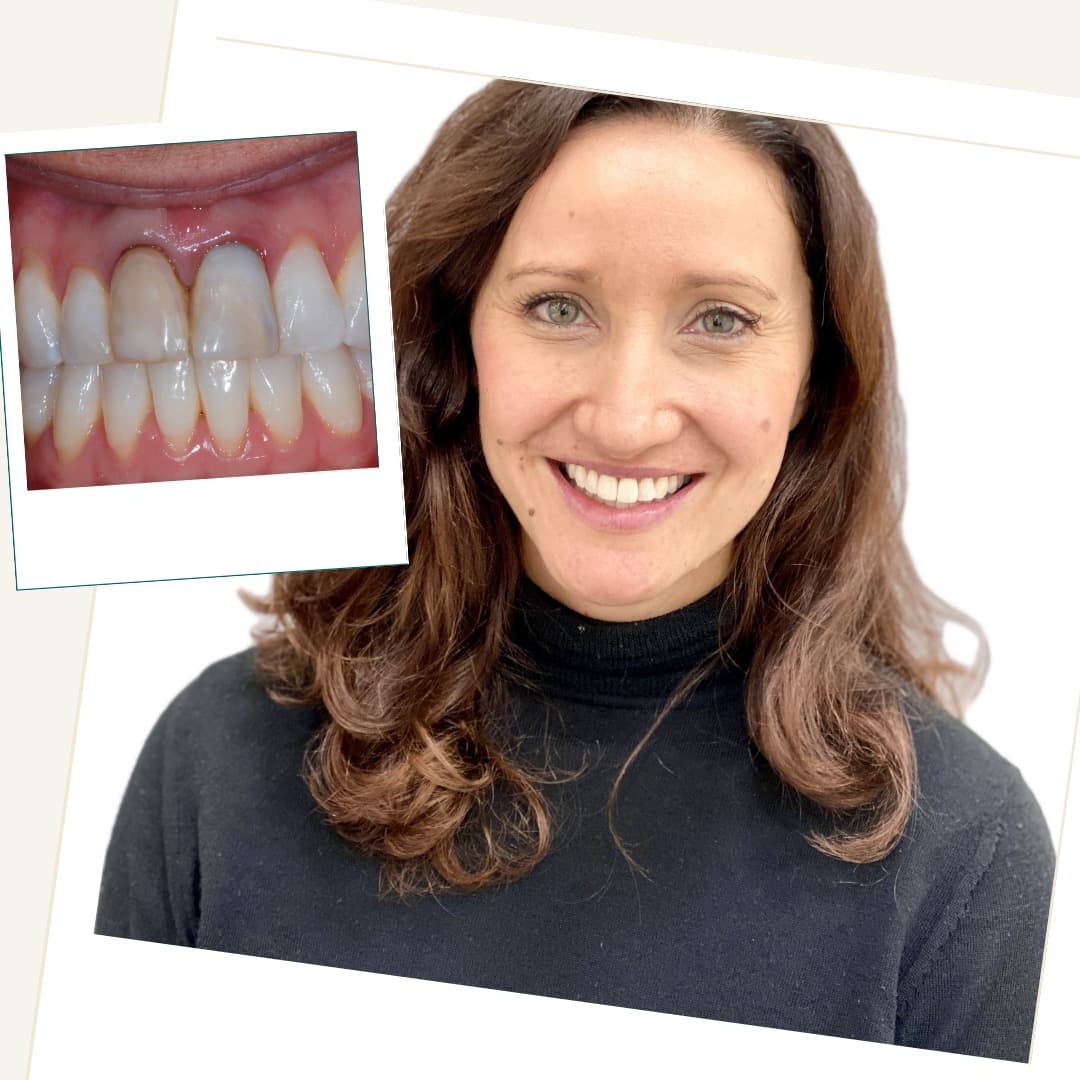
The patient attended with aesthetic and structural concerns about her upper central incisors, which had been injured during sport at approximately 10 years of age. Both teeth had subsequently undergone root canal treatment and received large composite restorations. Over time, the teeth and restorations became discoloured and chipped. The composite restoration on the upper left central incisor had fractured repeatedly and required several repairs.

A staged, tooth-preserving plan was developed to assess and manage the root-treated foundations first, reduce intrinsic discolouration and provide metal-free restorations designed for the remaining tooth structure, smile and bite.

Before and after clinical results of traumatised front teeth treated with internal whitening and ceramic e.max crowns
Patient case photographs published with verified website consent. Treatment outcomes vary between individuals.

Assessment and planning records

  • Clinical examination of the remaining tooth structure and discolouration
  • Radiographic assessment of the existing root canal treatments and tissues around the roots
  • Clinical photography to record the baseline shade and smile symmetry
  • Assessment of tooth proportions, bite contacts and available structural support

01

Stage 1: Root Canal Retreatment

Before restorative treatment, the existing root canal filling in the upper right central incisor was reassessed and retreatment was indicated.

Using magnification and contemporary endodontic techniques, the previous filling material was removed, the canal system was cleaned and disinfected, and a new root filling was placed.

02

Stage 2: Internal Whitening and General Whitening

Internal whitening, sometimes called the walking-bleach technique, was used to address discolouration within the root-treated tooth.

This was combined with supervised home whitening for the remaining teeth. Completing this stage before crown fabrication allowed the later ceramic shade to be selected against the stabilised tooth colour.

03

Stage 3: Post and Core Reconstruction

Following the whitening phase, the upper right central incisor was rebuilt with a tooth-coloured fibre post and core where additional retention was required for the planned crown.

The weakened and repeatedly fractured composite restoration on the upper left central incisor was replaced to provide a stable core for its final restoration.

04

Stage 4: Custom e.max Ceramic Crowns

The upper central incisors were restored with individually made e.max ceramic crowns. The laboratory prescription considered the agreed shade, tooth proportions and smile line.

Before fitting, the crowns were assessed clinically for fit, margins, shade, symmetry and bite contacts. They were then bonded following patient approval.

05

Post-Treatment Support and Maintenance

The patient received home-care guidance covering daily plaque control around the crown margins, regular dental reviews and professional hygiene appointments.

She was advised to avoid biting hard objects directly with the treated front teeth and to use a protective mouthguard or occlusal appliance if recommended following bite assessment.

Clinical limitations and maintenance considerations

  • Previously traumatised teeth: Root-treated teeth may have reduced remaining structure and require continuing review. Retreatment, internal whitening and crowns cannot remove every future biological or structural risk.
  • Restorative change: Colour differences, marginal changes, ceramic wear, chipping or fracture can occur over time and may require maintenance, repair or replacement.
  • Individual factors: Recommendations depend on the remaining tooth tissue, the condition of previous root fillings, gum health, bite forces and the agreed aesthetic aims.

About this patient case

This page describes one patient's assessment and treatment. Suitability, risks, maintenance requirements and outcomes vary. It does not guarantee that another patient will be suitable for the same approach or experience the same result.