Dual-Arch Implant Patient Case

Upper Implant-Retained Overdenture and Lower Fixed Implant Bridge

A removable upper restoration and fixed lower teeth supported by implants

The patient presented with multiple missing and broken teeth and advanced periodontal disease. Removable partial dentures had been used for several years, but limited retention caused movement during speech and chewing. This affected eating comfort and confidence in social situations.

A dual-arch implant plan was developed. It combined a removable upper complete overdenture retained by four implants with a fixed lower bridge supported by four implants. Matching metal-acrylic restorative materials were considered to provide compatible wear characteristics and a more cost-conscious alternative to ceramic full-arch restorations.

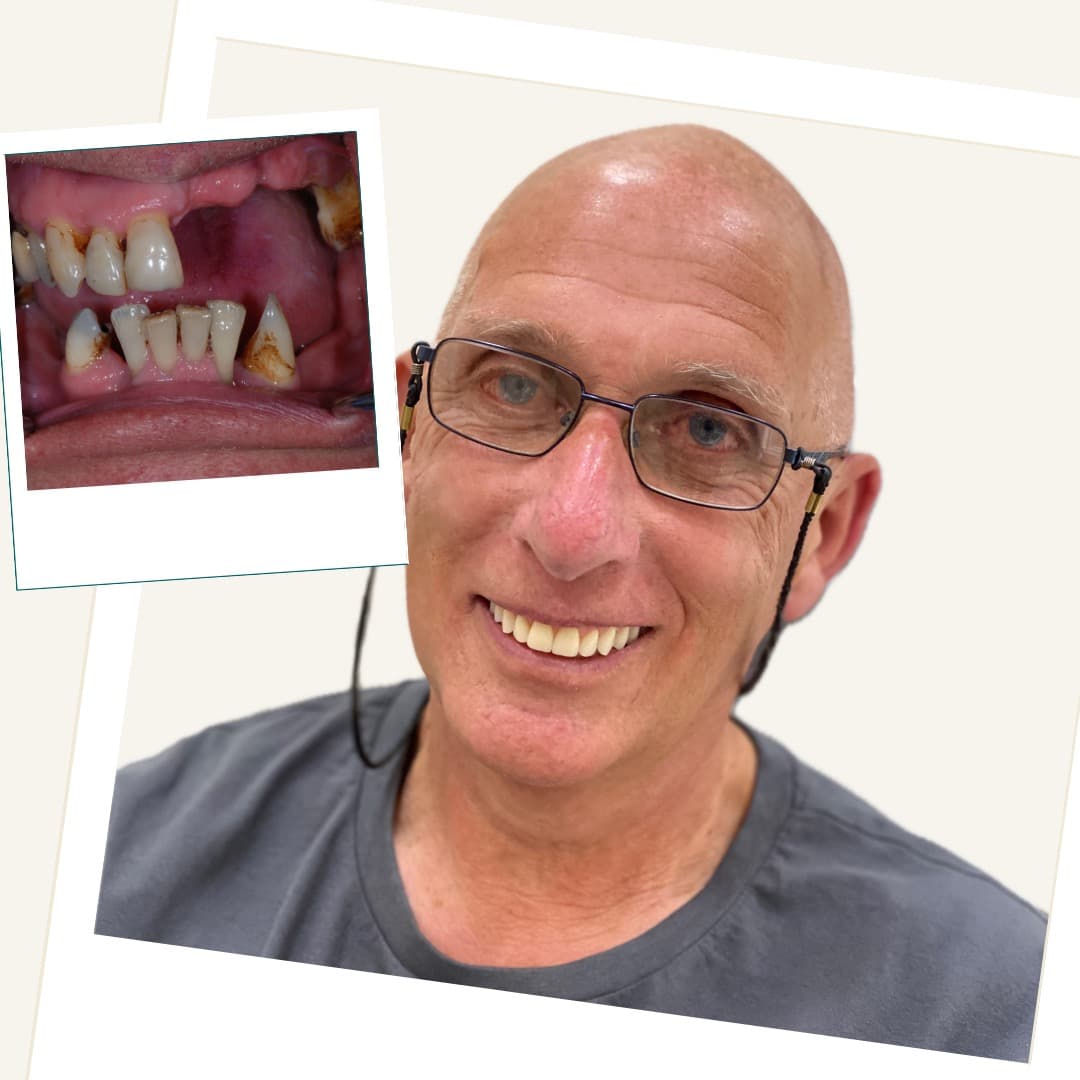
Patient following upper implant-overdenture and lower fixed-bridge treatment
Full-face smile photograph after the restorative phase.
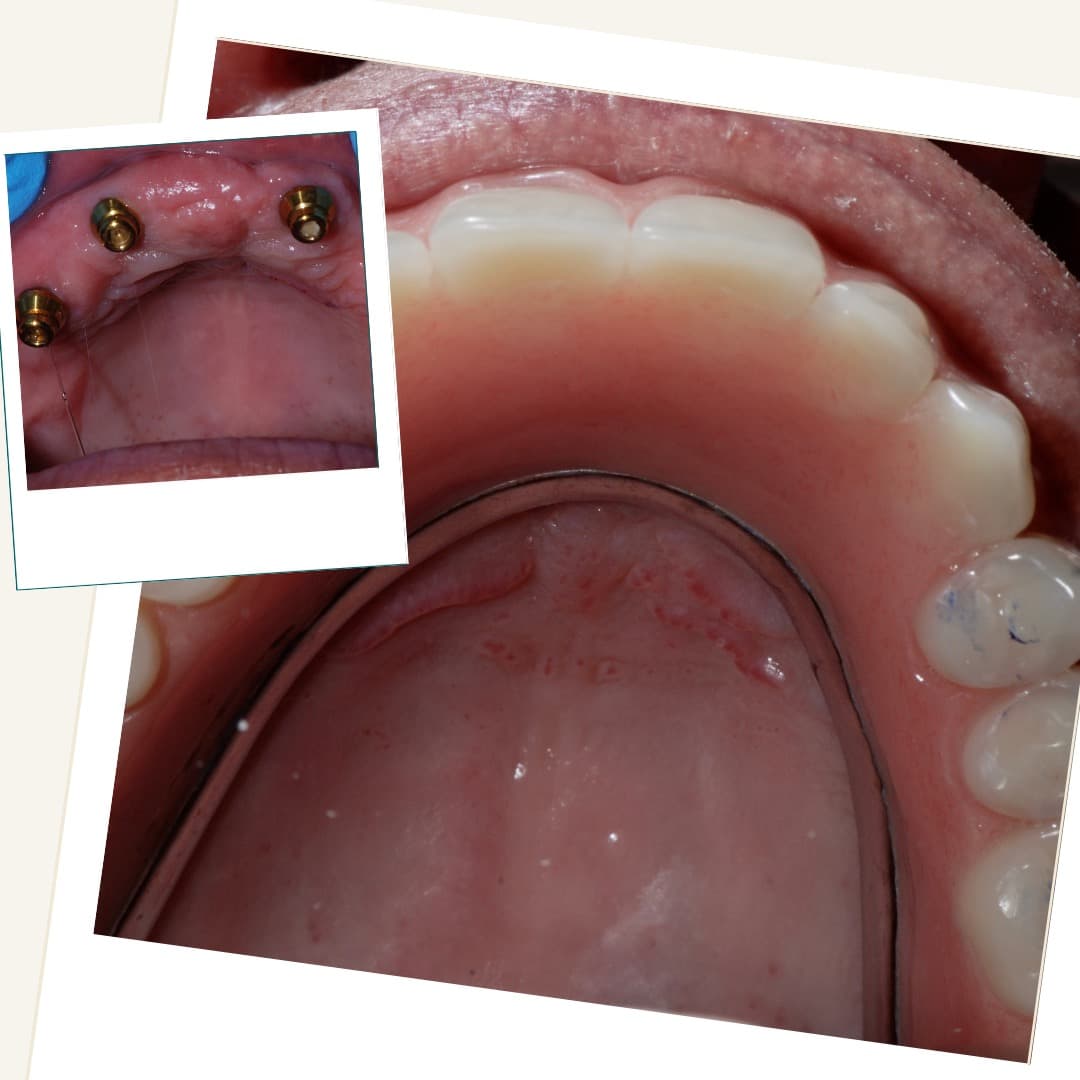
Upper arch showing implant attachments and the fitted horseshoe overdenture
Upper-arch implant attachments and the corresponding horseshoe overdenture.

Clinical photographs are published with verified patient website consent. Treatment outcomes vary between individuals.

Assessment and planning records

  • Clinical assessment of mobile teeth, broken crowns and periodontal health
  • Three-dimensional CBCT assessment of available bone in both arches
  • Evaluation of the existing partial dentures and soft-tissue support
  • Facial and bite-height measurements for coordinated upper and lower restorations
  • Pre-surgical records for the planned provisional restorations

01

Upper Arch: Four Implants and Bone Grafting

Teeth that could not be predictably retained were removed and four upper implants were placed. Bone-graft material was used at localised defects where clinically indicated.

A provisional complete denture was provided on the day of surgery. It was relieved around the implant sites to reduce pressure during the planned healing period.

02

Lower Arch: Four Implants and a Same-Day Provisional Bridge

Non-restorable lower teeth were extracted and four implants were placed during the surgical phase. Immediate loading was planned but remained dependent on implant stability and the clinical findings on the day.

Localised defects were grafted using substitute material combined with the patient's own bone collected from the surgical site where appropriate.

As the required stability was achieved in this case, a provisional fixed lower bridge was connected on the day of surgery. The procedure was completed under local anaesthesia after sedation and other comfort options had been discussed.

03

Definitive Upper Horseshoe Overdenture

After approximately six months of monitored healing, implant integration and tissue health were assessed before the definitive upper overdenture was made.

The metal-reinforced acrylic overdenture used the implants for retention and was designed with reduced palatal coverage where the clinical support permitted. It remained removable for daily cleaning and maintenance.

04

Definitive Lower Metal-Acrylic Implant Bridge

Following the healing and assessment phase, the lower provisional bridge was replaced with a definitive metal-reinforced acrylic bridge.

Using acrylic teeth over metal frameworks in both arches provided compatible opposing materials and a lower-cost restorative option than zirconia. Fit, cleaning access, speech and bite contacts were reviewed at delivery.

05

Periodontal Maintenance and Long-Term Care

Because of the patient's periodontal history, a three-month professional hygiene and clinical review interval was recommended initially, with timing adjusted according to ongoing findings.

Reviews included cleaning around the implants, checking tissue health, bite contacts, attachments and material wear. Daily removal and cleaning of the upper overdenture and cleaning beneath the lower bridge were demonstrated.

Clinical limitations and maintenance considerations

  • Immediate loading: A same-day fixed provisional bridge depends on implant stability, bone quality, bite design and patient factors. Loading must be delayed if the required conditions are not achieved.
  • Restorative maintenance: Acrylic teeth and denture components can wear, stain, chip or fracture and may require adjustment, relining, repair or replacement over time.
  • Periodontal risk: Previous gum disease increases the importance of effective home care and professional review. Poor plaque control and smoking can increase the risk of peri-implant disease.
  • Removable upper restoration: An implant-retained overdenture improves retention but must still be removed for cleaning, and its attachment components can wear and require renewal.

About this patient case

This page describes one patient's assessment and treatment. Implant suitability, loading protocol, healing time, risks, maintenance requirements and outcomes vary. It does not guarantee that another patient will be suitable for the same approach or experience the same result.