
01
Clinical Evaluation and Conservative Planning
Radiographic assessment did not identify signs of disease affecting the dental pulp or tissues around the roots of the teeth being considered for treatment.
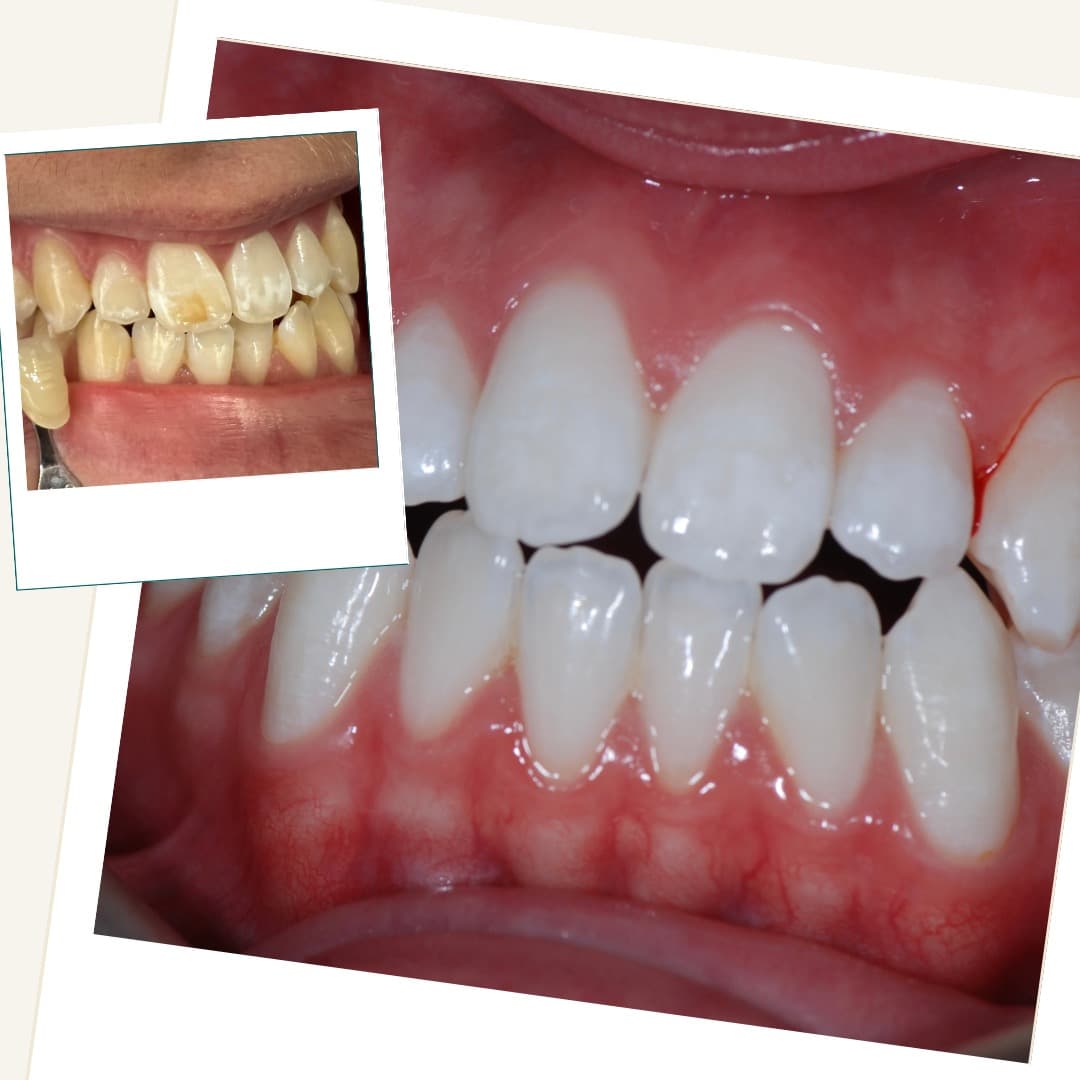
The distribution and apparent depth of the enamel defects were assessed. As the proposed treatment focused on the enamel surface, it offered a conservative alternative to ceramic restorations for this patient.
02
Stage 1: Professional Teeth Whitening
The patient completed a supervised three-week home teeth-whitening programme using the Enlighten system.
Whitening was completed first to lighten the overall background shade and reduce the contrast between the surrounding enamel and the developmental patches.
03
Stage 2: ICON Resin Infiltration
After an appropriate shade-stabilisation period, ICON resin infiltration was carried out to target the remaining white and brown enamel patches. The affected enamel was conditioned before a low-viscosity resin was applied according to the clinical protocol.
The resin enters microscopic porosities within the affected enamel and changes how light passes through the area. This can reduce the contrast of suitable defects without drilling the tooth for a conventional restoration.
04
Review of the Aesthetic Change
For this patient, the combined approach produced a lighter overall shade and reduced the contrast of the white and brown patches. The teeth were reviewed after treatment to assess the response and discuss any remaining colour or surface differences.
05
Post-Treatment Support and Maintenance
The patient received individual home-care advice, including daily plaque control and routine dental and hygiene reviews.
Advice also covered strongly staining foods and drinks, clinician-directed whitening top-ups where appropriate, avoiding heavy biting on hard objects and reporting new or persistent sensitivity.