
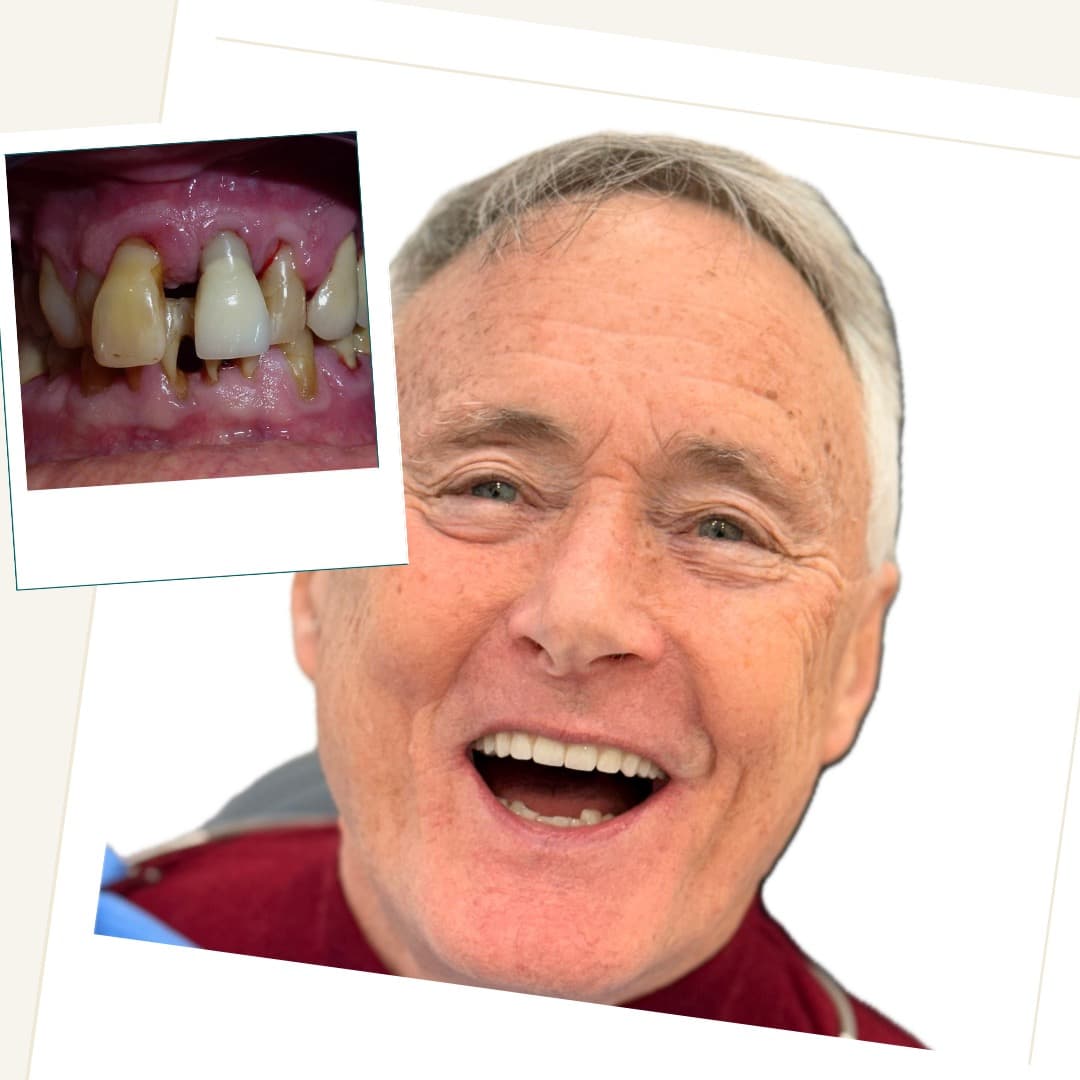
01
Upper-Arch Planning, Sinus Augmentation and PRF
The three existing upper implants were examined and considered suitable for inclusion in the new treatment plan. Their restorative connectors were changed to coordinate with the planned bridge design.
Three additional implants were placed to create a six-implant upper foundation. In areas with reduced posterior bone height, a transcrestal sinus-floor elevation was carried out where indicated.
Bone-graft material and platelet-rich fibrin (PRF), prepared from the patient's own blood, were used as part of the surgical procedure to support the grafted and soft-tissue sites.
02
Immediate Provisional Upper Bridge
A reinforced provisional acrylic bridge was prepared using the pre-operative records and planned implant positions.
As the required clinical stability was achieved in this case, the provisional bridge was connected to the six upper implants on the day of surgery. It provided an interim appearance and supported speech and carefully controlled function during healing. Post-operative dietary and loading restrictions were explained.
03
Lower-Arch Extractions and Implant Placement
The lower arch required a localised approach for compromised central incisors and a missing lower-right first molar. After the non-restorable lower incisors were removed, one implant was placed to support a two-unit splinted restoration where the available anatomy and load assessment permitted.
A further implant was placed at the lower-right first-molar site, with bone-graft material used to support the socket contour where required.
After approximately three months of monitored healing, integration and tissue health were assessed before the definitive lower restorations were fitted.
04
Definitive Upper Zirconia Bridge
After approximately six months, the provisional upper bridge was removed and the six implant foundations, surrounding tissues and restorative space were reassessed.
A screw-retained zirconia-based full-arch bridge was then fitted. Its fit, access for cleaning, appearance, speech and bite contacts were reviewed before final tightening and subsequent monitoring.
05
Long-Term Maintenance and Load Management
Because of the patient's periodontal history and heavy bite forces, a three-month professional hygiene and clinical review interval was recommended initially, with future timing adjusted according to clinical findings.
A custom night guard was provided after the bite had stabilised to help reduce mechanical loading. The patient also received guidance on cleaning beneath the bridge and avoiding heavy biting on very hard objects.